


World Wide Suppliers of Industrial Sapphire&Ruby Precision Parts
Sapphire to Metal for Fluidic,Metrology&Medical Components
ISO 9001:2019 Mfg&Managment Certified Companies
-
Home
-
Products

- ALL products
- Custom Sapphire Optical Lenses
- IPL Filters & Light Guides
- Sapphire Optical Prisms
- Precision Zirconia Ceramic Parts
- Single Crystal Silicon Carbide(SiC 6H/ 4H)
- Custom Optical Windows
- Optical Lens
- Sapphire Substrates & Wafers
- CMM Styli & Probe Tips
- Precision Sapphire Orifice Jewels
- Sapphire Windows
- Jewel Bearing
- Custom Sapphire Tubes & Rods
- Ruby, Sapphire & Ceramic Balls and Hemispheres
- Ruby Orifice Nozzles & Fittings
- Sapphire&Ruby Assembly Parts
- Sapphire & Ruby Nozzles
- Custom Shaped Sapphire Parts
-
Material
-
Applications
-
About Us
-
Resources
-
Contact Us
-
- Custom Sapphire Optical Lenses
- IPL Filters & Light Guides
- Sapphire Optical Prisms
- Precision Zirconia Ceramic Parts
- Single Crystal Silicon Carbide(SiC 6H/ 4H)
- Custom Optical Windows
- Optical Lens
- Sapphire Substrates & Wafers
- CMM Styli & Probe Tips
- Precision Sapphire Orifice Jewels
- Sapphire Windows
- Jewel Bearing
- Custom Sapphire Tubes & Rods
- Ruby, Sapphire & Ceramic Balls and Hemispheres
- Ruby Orifice Nozzles & Fittings
- Sapphire&Ruby Assembly Parts
- Sapphire & Ruby Nozzles
- Custom Shaped Sapphire Parts
Single Crystal Silicon Carbide(SiC 6H/ 4H)
Precision SiC materials and components for semiconductor, aerospace, optical and high-temperature applications.
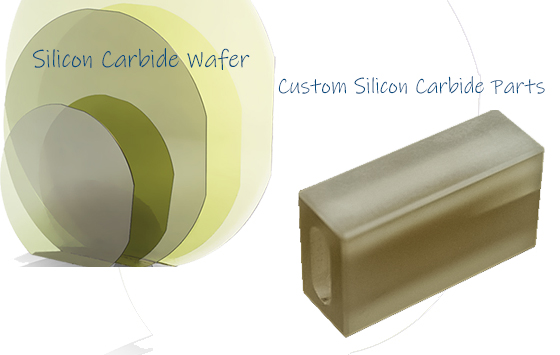
Microwork supplies single-crystal silicon carbide (SiC) materials and precision components for applications requiring high thermal stability, high hardness, chemical resistance, low density and excellent mechanical performance.
4H-SiC and 6H-SiC are important single-crystal silicon carbide polytypes used in semiconductor, optoelectronic, high-temperature, radiation-resistant and high-power electronic applications. Single-crystal SiC can also be optically polished for lightweight mirrors, reflective imaging systems, aerospace optical systems and precision wafer-handling components.
Compared with conventional optical glass, metals and many technical ceramics, single-crystal SiC offers a unique combination of stiffness, thermal conductivity, low thermal expansion and environmental stability. However, SiC is difficult to machine and polish, so geometry, surface quality, flatness, thickness, edge condition and crystal type should be reviewed carefully during design.
Available SiC Options
Available options may include:
• 4H-SiC single-crystal material
• 6H-SiC single-crystal material
• SiC wafers and substrates
• SiC optical blanks and mirror components
• Precision SiC plates
• SiC windows
• SiC custom-shaped parts
• SiC components for semiconductor and high-temperature applications
• SiC parts for optical, aerospace and harsh-environment systems
Custom dimensions, crystal type, surface finish and polishing requirements can be reviewed based on your drawing and application conditions.
Typical Applications
Common applications include:
• Semiconductor equipment components
• Semiconductor wafer handling parts
• SiC wafers and substrates
• High-temperature components
• Radiation-resistant components
• Aerospace optical systems
• Lightweight scan mirrors
• Reflective imaging systems
• Astronomy and precision optical systems
• Optoelectronic components
• High-power electronic applications
• Harsh-environment mechanical components
Material Properties of 4H-SiC and 6H-SiC
Single-crystal silicon carbide is valued for its hardness, stiffness, thermal conductivity, chemical resistance and dimensional stability.
Typical material properties may include:
Material: Single-crystal silicon carbide / SiC
Crystal types: 4H-SiC and 6H-SiC
Hardness: High hardness suitable for wear-resistant and precision applications
Density: Low density compared with many metals
Thermal conductivity: High thermal conductivity depending on crystal type and material grade
Thermal expansion: Low thermal expansion suitable for stable optical and mechanical systems
Chemical resistance: Excellent resistance to many harsh environments
Optical use: Can be polished for selected reflective optical applications
Electrical / semiconductor use: Important material family for high-power and high-temperature semiconductor applications
The values of SiC material properties may vary depending on crystal grade, supplier, doping type, orientation and measurement method. Final specifications should be confirmed according to project requirements.
4H-SiC vs 6H-SiC
4H-SiC and 6H-SiC are different polytypes of single-crystal silicon carbide. They have similar hardness and density, but differ in crystal structure, electronic properties, bandgap and certain optical or semiconductor-related characteristics.
4H-SiC is commonly associated with high-power and high-frequency semiconductor applications due to its electronic properties.
6H-SiC may be selected for optical, substrate or specific application requirements depending on availability, crystal orientation, size and performance needs.
For precision components, the choice between 4H-SiC and 6H-SiC should be based on application requirements such as optical behavior, electrical performance, thermal management, crystal orientation, available size and cost.
Typical Specifications
Material: Single-crystal silicon carbide / SiC
Crystal type: 4H-SiC, 6H-SiC or specified SiC grade
Product type: Wafer, substrate, optical blank, mirror component, plate, window or custom-shaped part
Orientation: Custom orientation available according to application requirement
Size: Custom size available upon drawing review
Thickness: Custom thickness available depending on component design
Thickness tolerance: Custom tolerance available upon requirement
Surface finish: Fine ground, lapped, polished or optical polished surface available depending on application
Flatness: Custom flatness available depending on size, thickness and surface requirement
Edge condition: Fine ground, chamfered or polished edges available
Surface quality: Custom surface quality available for selected optical surfaces
Application: Semiconductor, optical, aerospace, high-temperature, radiation-resistant or harsh-environment use
Engineering Considerations
When designing single-crystal SiC components, engineers should consider crystal type, crystal orientation, part geometry, thickness, flatness, surface roughness, edge condition, polishing requirement and operating environment.
SiC provides excellent stiffness, hardness, thermal conductivity and environmental stability, but it is also a difficult material to machine. Thin parts, sharp corners, high flatness requirements, optical polishing, tight thickness tolerance and mirror-quality surfaces can significantly affect manufacturability, lead time and cost.
For optical or mirror applications, surface figure, roughness, coating compatibility and mounting stress should be reviewed carefully. For semiconductor or wafer-handling applications, cleanliness, flatness, edge condition and dimensional stability may become critical.
For early-stage projects, please provide the drawing, crystal type if specified, orientation requirement, dimensions, thickness tolerance, flatness, surface quality, roughness, polishing requirement and application environment.
SiC vs Sapphire and Other Technical Ceramics
Single-crystal SiC is often selected when stiffness, thermal conductivity, low thermal expansion and high-temperature stability are important.
Sapphire is preferred when optical transmission, extreme hardness and chemical resistance are required in transparent components.
Alumina and zirconia ceramics may be more cost-effective for many structural ceramic applications, but SiC may be more suitable when thermal stability, lightweight stiffness or semiconductor-related performance is required.
The final material selection should be based on optical function, thermal load, mechanical load, chemical environment, size, tolerance and cost target.
Information Needed for Quotation
To review a custom single-crystal SiC component, please provide:
• Drawing or specification
• Crystal type: 4H-SiC, 6H-SiC or specified grade
• Orientation requirement, if any
• Dimensions and thickness
• Thickness tolerance
• Flatness requirement
• Surface roughness requirement
• Surface quality requirement, if applicable
• Polishing or coating requirement
• Edge condition requirement
• Application environment
• Quantity and inspection requirement
Need a Custom Single-Crystal SiC Component?
Send us your drawing, crystal type, orientation requirement, surface finish, flatness, thickness tolerance and operating conditions. We can help review manufacturability, material suitability and key technical risks before quotation.
Single Crystal Silicon Carbide(SiC 6H/ 4H)
Precision SiC materials and components for semiconductor, aerospace, optical and high-temperature applications.
Microwork supplies single-crystal silicon carbide (SiC) materials and precision components for applications requiring high thermal stability, high hardness, chemical resistance, low density and excellent mechanical performance.
4H-SiC and 6H-SiC are important single-crystal silicon carbide polytypes used in semiconductor, optoelectronic, high-temperature, radiation-resistant and high-power electronic applications. Single-crystal SiC can also be optically polished for lightweight mirrors, reflective imaging systems, aerospace optical systems and precision wafer-handling components.
Compared with conventional optical glass, metals and many technical ceramics, single-crystal SiC offers a unique combination of stiffness, thermal conductivity, low thermal expansion and environmental stability. However, SiC is difficult to machine and polish, so geometry, surface quality, flatness, thickness, edge condition and crystal type should be reviewed carefully during design.
Available SiC Options
Available options may include:
• 4H-SiC single-crystal material
• 6H-SiC single-crystal material
• SiC wafers and substrates
• SiC optical blanks and mirror components
• Precision SiC plates
• SiC windows
• SiC custom-shaped parts
• SiC components for semiconductor and high-temperature applications
• SiC parts for optical, aerospace and harsh-environment systems
Custom dimensions, crystal type, surface finish and polishing requirements can be reviewed based on your drawing and application conditions.
Typical Applications
Common applications include:
• Semiconductor equipment components
• Semiconductor wafer handling parts
• SiC wafers and substrates
• High-temperature components
• Radiation-resistant components
• Aerospace optical systems
• Lightweight scan mirrors
• Reflective imaging systems
• Astronomy and precision optical systems
• Optoelectronic components
• High-power electronic applications
• Harsh-environment mechanical components
Material Properties of 4H-SiC and 6H-SiC
Single-crystal silicon carbide is valued for its hardness, stiffness, thermal conductivity, chemical resistance and dimensional stability.
Typical material properties may include:
Material: Single-crystal silicon carbide / SiC
Crystal types: 4H-SiC and 6H-SiC
Hardness: High hardness suitable for wear-resistant and precision applications
Density: Low density compared with many metals
Thermal conductivity: High thermal conductivity depending on crystal type and material grade
Thermal expansion: Low thermal expansion suitable for stable optical and mechanical systems
Chemical resistance: Excellent resistance to many harsh environments
Optical use: Can be polished for selected reflective optical applications
Electrical / semiconductor use: Important material family for high-power and high-temperature semiconductor applications
The values of SiC material properties may vary depending on crystal grade, supplier, doping type, orientation and measurement method. Final specifications should be confirmed according to project requirements.
4H-SiC vs 6H-SiC
4H-SiC and 6H-SiC are different polytypes of single-crystal silicon carbide. They have similar hardness and density, but differ in crystal structure, electronic properties, bandgap and certain optical or semiconductor-related characteristics.
4H-SiC is commonly associated with high-power and high-frequency semiconductor applications due to its electronic properties.
6H-SiC may be selected for optical, substrate or specific application requirements depending on availability, crystal orientation, size and performance needs.
For precision components, the choice between 4H-SiC and 6H-SiC should be based on application requirements such as optical behavior, electrical performance, thermal management, crystal orientation, available size and cost.
Typical Specifications
Material: Single-crystal silicon carbide / SiC
Crystal type: 4H-SiC, 6H-SiC or specified SiC grade
Product type: Wafer, substrate, optical blank, mirror component, plate, window or custom-shaped part
Orientation: Custom orientation available according to application requirement
Size: Custom size available upon drawing review
Thickness: Custom thickness available depending on component design
Thickness tolerance: Custom tolerance available upon requirement
Surface finish: Fine ground, lapped, polished or optical polished surface available depending on application
Flatness: Custom flatness available depending on size, thickness and surface requirement
Edge condition: Fine ground, chamfered or polished edges available
Surface quality: Custom surface quality available for selected optical surfaces
Application: Semiconductor, optical, aerospace, high-temperature, radiation-resistant or harsh-environment use
Engineering Considerations
When designing single-crystal SiC components, engineers should consider crystal type, crystal orientation, part geometry, thickness, flatness, surface roughness, edge condition, polishing requirement and operating environment.
SiC provides excellent stiffness, hardness, thermal conductivity and environmental stability, but it is also a difficult material to machine. Thin parts, sharp corners, high flatness requirements, optical polishing, tight thickness tolerance and mirror-quality surfaces can significantly affect manufacturability, lead time and cost.
For optical or mirror applications, surface figure, roughness, coating compatibility and mounting stress should be reviewed carefully. For semiconductor or wafer-handling applications, cleanliness, flatness, edge condition and dimensional stability may become critical.
For early-stage projects, please provide the drawing, crystal type if specified, orientation requirement, dimensions, thickness tolerance, flatness, surface quality, roughness, polishing requirement and application environment.
SiC vs Sapphire and Other Technical Ceramics
Single-crystal SiC is often selected when stiffness, thermal conductivity, low thermal expansion and high-temperature stability are important.
Sapphire is preferred when optical transmission, extreme hardness and chemical resistance are required in transparent components.
Alumina and zirconia ceramics may be more cost-effective for many structural ceramic applications, but SiC may be more suitable when thermal stability, lightweight stiffness or semiconductor-related performance is required.
The final material selection should be based on optical function, thermal load, mechanical load, chemical environment, size, tolerance and cost target.
Information Needed for Quotation
To review a custom single-crystal SiC component, please provide:
• Drawing or specification
• Crystal type: 4H-SiC, 6H-SiC or specified grade
• Orientation requirement, if any
• Dimensions and thickness
• Thickness tolerance
• Flatness requirement
• Surface roughness requirement
• Surface quality requirement, if applicable
• Polishing or coating requirement
• Edge condition requirement
• Application environment
• Quantity and inspection requirement
Need a Custom Single-Crystal SiC Component?
Send us your drawing, crystal type, orientation requirement, surface finish, flatness, thickness tolerance and operating conditions. We can help review manufacturability, material suitability and key technical risks before quotation.
-
Chonghong Industries(Microwork)Ltd.
 1803,2006,Huachuang Building
 Honghuang 10th Road Jiangbei District
Chongqing China 400020
 0086 023 67937146
 0086 18623135040
 sales@ch-microwork.com
 13500373464